Am I Nima Word Combinations
How the brain UI, library, and mouth dialogue turn objects into memories and answers.
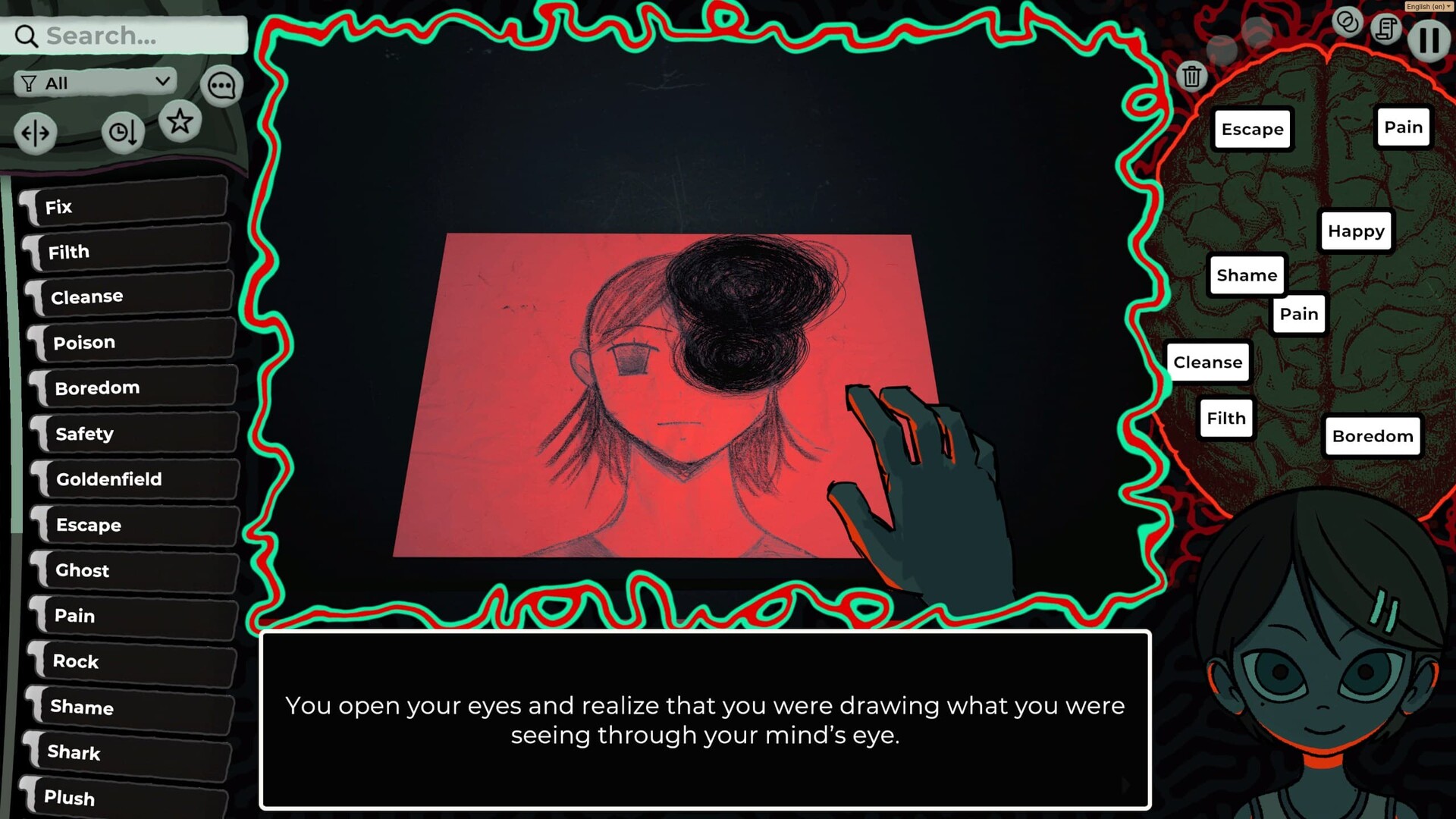
Word combining is the heart of Am I Nima. HO! Games built a psychological horror fantasy where vocabulary is inventory, memory is crafting, and dialogue is the boss fight. This guide explains the brain UI, how the word library grows, how mouth dialogue differs from private thought, and which demo combinations players find most useful—without dumping every spoiler in the first paragraph.
If you are brand new, skim Getting Started first. If you need a full room-by-room path, use the Demo Walkthrough. For Annabelle’s quizzes specifically, pair this page with Mom’s Tests.
How the brain UI works
As you click objects in Nima’s rooms, you extract words: nouns, relationships, emotions, and odd concrete details. Those words collect in a mental library. Inside the brain interface you drag concepts together to form new entries. A successful combination can:
- Unlock a memory fragment about Nima’s past
- Create a dialogue option for speaking to mom
- Reframe how Nima understands an object or person
- Push the story toward softer or darker emotional states
Failed or hostile mixes are still informative. They teach tone. Am I Nima cares about how you think, not only whether a recipe exists. Combining out of curiosity is encouraged; combining out of cruelty can steer endings.
The official materials promise a large design space for the full release—over 230 words and more than 5000 combinations across five chapters. The demo already demonstrates the fantasy with dozens of meaningful pairings and enough dead ends to make experimentation tense.
Library discipline: tips that save time
- Click thoroughly. Missed hotspots mean missing verbs for later tests.
- Prefer collecting environment words before forcing random hatred mixes.
- Revisit rooms after major story beats; new interactions sometimes appear.
- Keep emotional opposites in mind: love and fear can both attach to family words.
- Treat puns and pop-culture-adjacent names as intentional—HO! Games enjoys wordplay.
- When a test is active, filter your library toward the topic mom asked about.
Input-wise, you primarily mouse-click objects and drag words. See Controls for practical interaction notes from the demo.
Mouth versus mind
Not every combination should be spoken. Private brain discoveries can stay internal until you choose to present them through the mouth during dialogue. That separation matters during mom’s tests: you may know a cruel interpretation and still choose a safer spoken answer. Players who dump every invasive thought into conversation tend to escalate conflict faster.
A good rhythm is: explore, combine privately, then select the spoken option that matches the persona you want Annabelle to believe—usually the caring daughter, not the hostile investigator—unless you are chasing a specific bad ending.
Spoiler-light practice loop
- Clear a room of object words.
- Combine related household or family concepts first.
- Test one experimental pairing at a time.
- Note which results feel like memories versus insults.
- Enter dialogue with a shortlist of safe spoken options.
- After the scene, return to freer experimentation.
This loop mirrors how the demo teaches systems without requiring a wiki open the entire time.
Spoiler section: useful demo combinations
Stop here if you want to discover recipes yourself. The following examples are widely discussed from the demo and help when you are stuck. They are not a complete list of all 5000+ full-game possibilities.
- Stranger + Nima can surface a mom-related insight—useful when identity is confused.
- Mom + Nima can yield emotional results such as love, fear, or family framing depending on context and prior discoveries.
- Life + Fossil connects to obsession themes that appear around Annabelle’s tests and collections.
- Nima + mimic can point toward parasite readings that fuel late-demo theories.
- Combinations built around Hatred or heavy Obsession lean into bad endings if you keep pressing them in dialogue.
- Pet and aquarium clues feed the safe puzzle; environmental storytelling around fish and father wordplay matters more than brute-forcing letter locks. For the lock itself, see Safe Code.
These recipes illustrate design intent: personal identity words collide with family roles; scientific or medical words collide with affection; mimicry and strangerhood collide with daughterhood. When a combination feels thematically on-the-nose, it is probably intentional.
How combinations interact with tests and endings
Annabelle’s tests are not separate from the word system—they are the pressure cooker for it. She presents objects (including a shark plushie tied to aquarium memories, and fossil-related prompts) and watches whether your spoken answers sound like her daughter. Probing too hard, leaning into hatred, or obsessing in the wrong direction can collapse the scene into the demo’s lobotomy-adjacent failure loop. Details live on Mom’s Tests and Endings and Theories.
Think of combinations as alignment. Soft, coherent family meanings keep the performance alive. Parasite, stranger, or hatred meanings may be “true” in a theory sense and still be the wrong thing to say out loud in that moment.
Full game outlook for word systems
On release, expect more environments and a much larger object vocabulary. That means more lateral puns, more emotional graphs, and more ways to fail or succeed a chapter test. Demo mastery still transfers: click everything, combine thematically, speak selectively.
Related guides
Word combining rewards patience. Fill the library, respect the mouth filter, and save your darkest experiments for runs where you intentionally want to see what Annabelle does when she stops believing you.
Frequently Asked Questions
Quick answers to the most common questions.
Do I need a complete Am I Nima combination list to finish the demo?
No. Thorough exploration and thematic pairing usually unlock enough options. Use spoiler combo lists only when stuck.
What is the difference between brain combinations and mouth dialogue?
Brain combinations discover ideas privately. Mouth dialogue is what you present to Annabelle. Knowing something harmful does not require saying it.
Can bad combinations lock me out of the demo?
Hostile or obsessive paths can push you into bad ending loops, including the lobotomy-style failure. You can usually replay and try calmer approaches.
Will the full game reuse demo combinations?
Expect the same systems with far more words and pairings across five chapters. Demo recipes remain useful training, not a complete endgame list.